
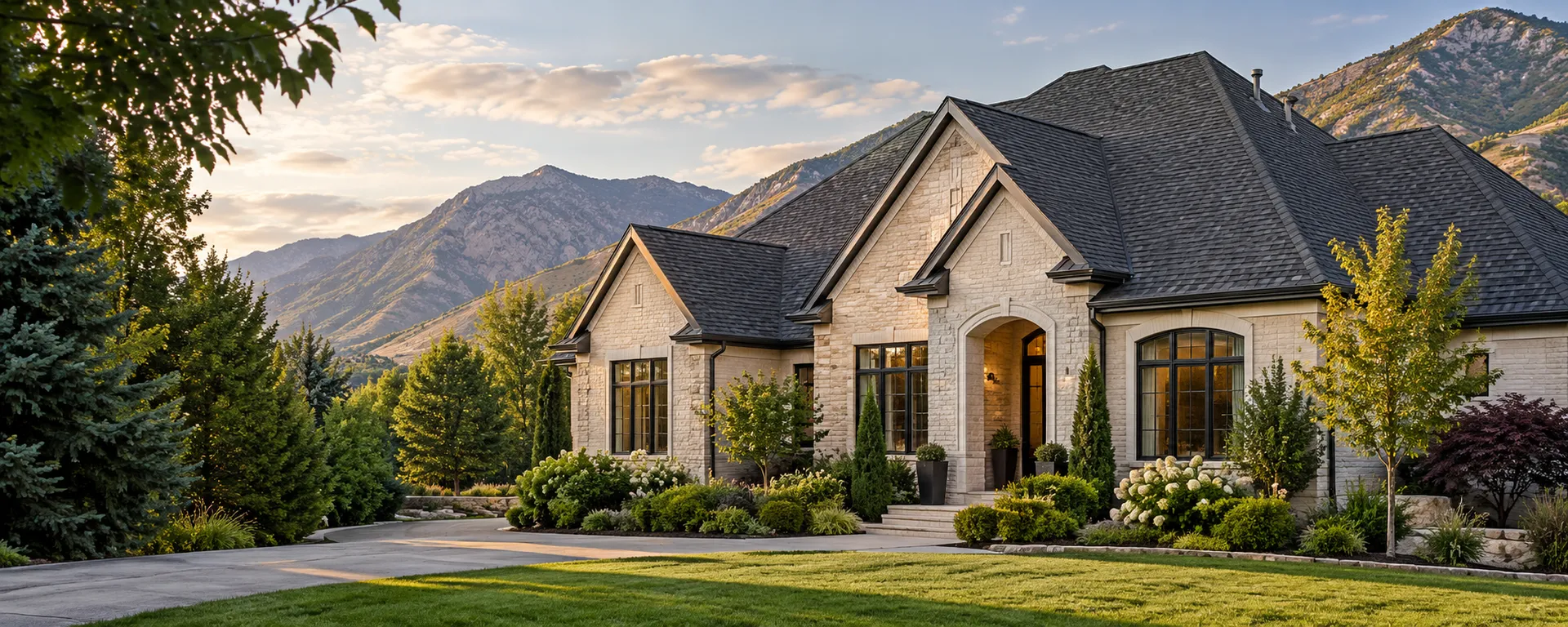
Roof Replacement / Davis & Weber counties
A new roof starts with a clear plan.
Look beyond the shingles. Plan the tear-off, deck, flashing, ventilation and written scope before choosing a roof replacement.
A roof replacement is a system decision. The visible material matters, but so do the deck beneath it, water-shedding details, ventilation and the way additional work is handled. A complete written scope makes those decisions visible before work begins.
Replace for the condition, not a birthday.
Widespread deterioration, repeated failures and damage that cannot be repaired reliably may support replacement. The age of a roof, recent storms and past repairs provide background, but the actual condition should lead the recommendation.
Ask for photographs and an explanation of what can be retained, what needs replacing and what cannot be confirmed until the old covering is removed. A clear recommendation should also explain whether a repair remains reasonable.
Understand what is beneath the surface.
Existing layers and roof-deck condition affect the work. A tear-off can expose damage that was hidden during the initial assessment. The estimate should explain how deck repairs will be priced, documented and approved.
A roof-over is not automatically suitable. Existing layers, deck condition, weight, local requirements and manufacturer instructions all need consideration before selecting that approach.
- Existing covering and underlayment removal
- Deck inspection and a written concealed-damage allowance
- Flashing, valleys, penetrations and edge details
- Compatible underlayment, starter, covering and ridge components
- Ventilation assessment and permit responsibilities
Choose a material as part of a system.
Architectural asphalt shingles and standing-seam metal offer different appearance, maintenance and investment profiles. Roof pitch, roof shape, product requirements and transitions to other materials can narrow the options.
Compare the exact proposed system, not simply a material name. Color samples, fastener details, accessories and written warranty conditions should relate to the product actually specified.
Plan the days around the work.
Discuss access, deliveries, debris containers, landscaping, vehicles, pets and entrances. Ask how weather delays are handled and what happens if work exposes damaged decking.
Inspection timing can affect when the roof is covered. The permit holder and required inspection stages should be clear before installation begins. Your city building department is the authority for your property.
Close out with the paperwork.
Keep the final scope, approved changes, inspection documentation where applicable and the actual warranty documents. Manufacturer material coverage and contractor workmanship coverage are different commitments.
New-construction roofing involves additional coordination with plans, framing and deck readiness. Confirm that scope separately rather than assuming a replacement estimate also covers a new build.
Useful questions
Before you decide.
Is roof area the same as home square footage?
No. Roof surface area changes with pitch, overhangs, attached structures and roof geometry. A house-floor-area figure alone is not a roof measurement.
What happens if damaged decking is discovered?
The written agreement should explain how additional decking is documented, priced and approved before the extra work proceeds.
Are material and labor warranties the same?
No. Manufacturer and workmanship commitments may have different issuers, exclusions and registration requirements. Read the actual terms for the proposed system.
Your next step
Let's start with your roof.
Share the property and the question. Confirm the scope before committing to work.