
Roofing guides / Homeowner information
How climate affects a roofing material choice.
Practical roofing guidance for northern Utah homeowners.
Climate is a design input, not a material verdict.
A roof needs an assembly suited to the actual building, slope, exposure and local requirements. Snow, wind, rain and heat influence the design, but a climate label alone does not establish that asphalt, tile or metal is suitable.
Material strength is not the same as structural capacity. Confirm the deck, framing, attachment and transitions before changing to a heavier covering or using a headline weather rating.
Asphalt shingles in variable weather.
Asphalt shingles are not universally unsuitable where snow falls. Suitability depends on the product, slope, complete system, installation and local requirements. Impact, wind and fire classifications are product/assembly-specific.
Ask which covering and compatible components are proposed and what the written terms require. An appearance sample does not establish a tested performance rating.
Metal: account for details and snow movement.
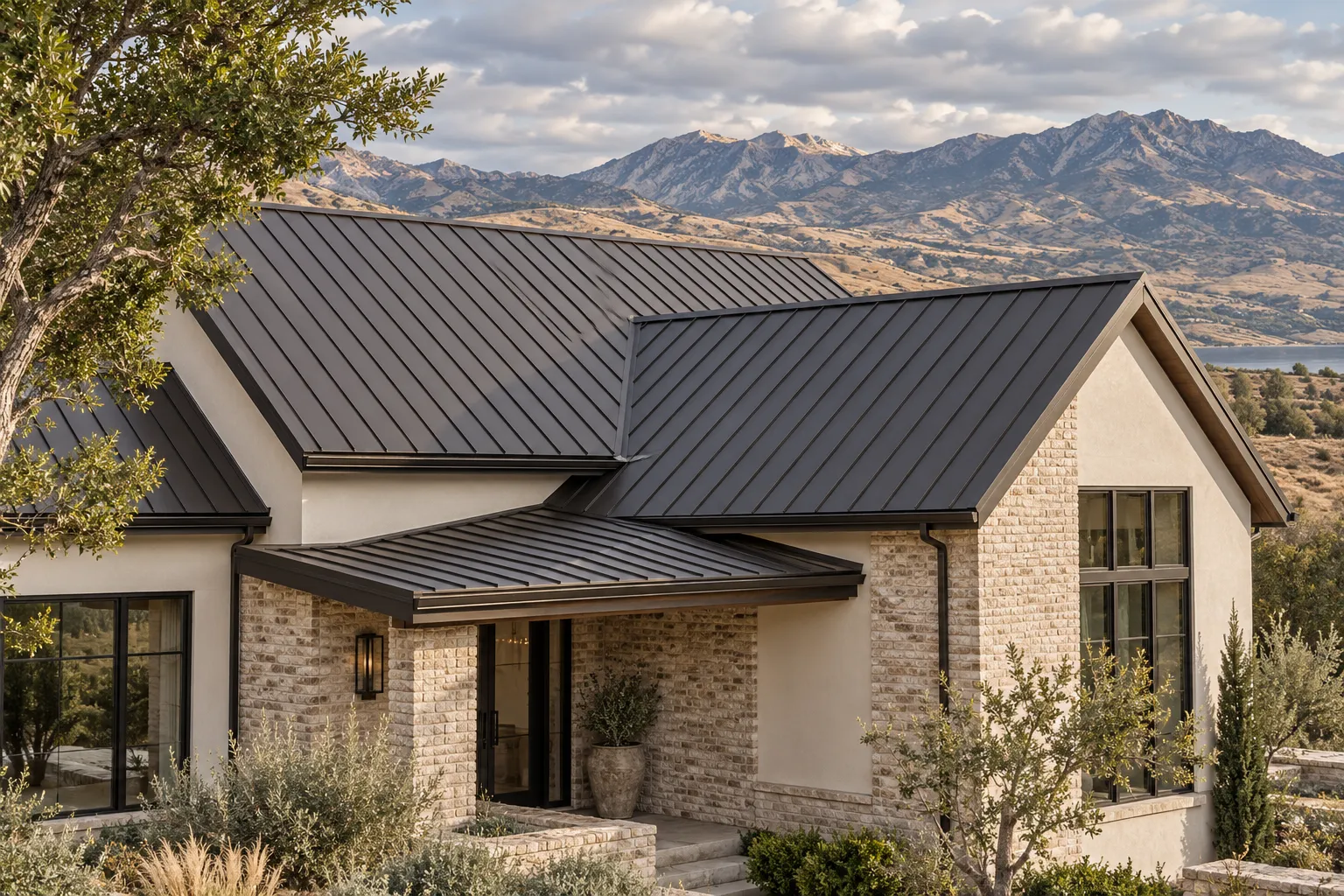
Standing seam and exposed-fastener systems use different attachments and maintenance details. Coating, material and assembly affect corrosion and heat behavior; not every metal roof performs identically.
Snow and ice may shed toward entrances, walkways or lower roofs. Snow retention and site safety need consideration rather than presenting shedding as an automatic winter advantage.
Tile and slate: check weight and compatibility.
Clay, concrete and natural slate can provide particular architectural appearances, but their weight, underlayment, flashing and product-specific requirements matter. Do not assume they are right for all hot climates or wrong for every cold one.
Ask whether the existing structure can support the proposed system and whether additional assessment is needed. A natural surface does not make the whole roof fireproof, leakproof or maintenance-free.
Wood and specialty systems need their own questions.
Wood shingles/shakes, membranes, synthetic coverings and planted roofs are different assemblies, not interchangeable climate upgrades. Local requirements, fire classification, drainage, maintenance and actual contractor capability influence the choice.
A planted or occupied roof needs design for its intended use and loads. An ordinary low-slope covering is not automatically suitable for a patio, deck or garden.
Compare the whole proposal.
Use measured roof area, pitch, access, removal, deck condition, components and written maintenance/warranty terms. The most expensive or newest material is not automatically the best fit.
For northern Utah, verify the responsible building authority and project-specific criteria. Ground-snow values are not a safe roof-load limit, and roof color alone does not resolve insulation, air leakage or ice dams.
Related reading
Your next step
Let's start with your roof.
Share the property and the question. Confirm the scope before committing to work.