
← Roofing guides
Roofing guides / Homeowner information
Flat Roofing vs. Pitched Roofing: Which is Right for You?
Practical roofing guidance for northern Utah homeowners.
Planning / Utah Roofing CompanyPublished Updated on
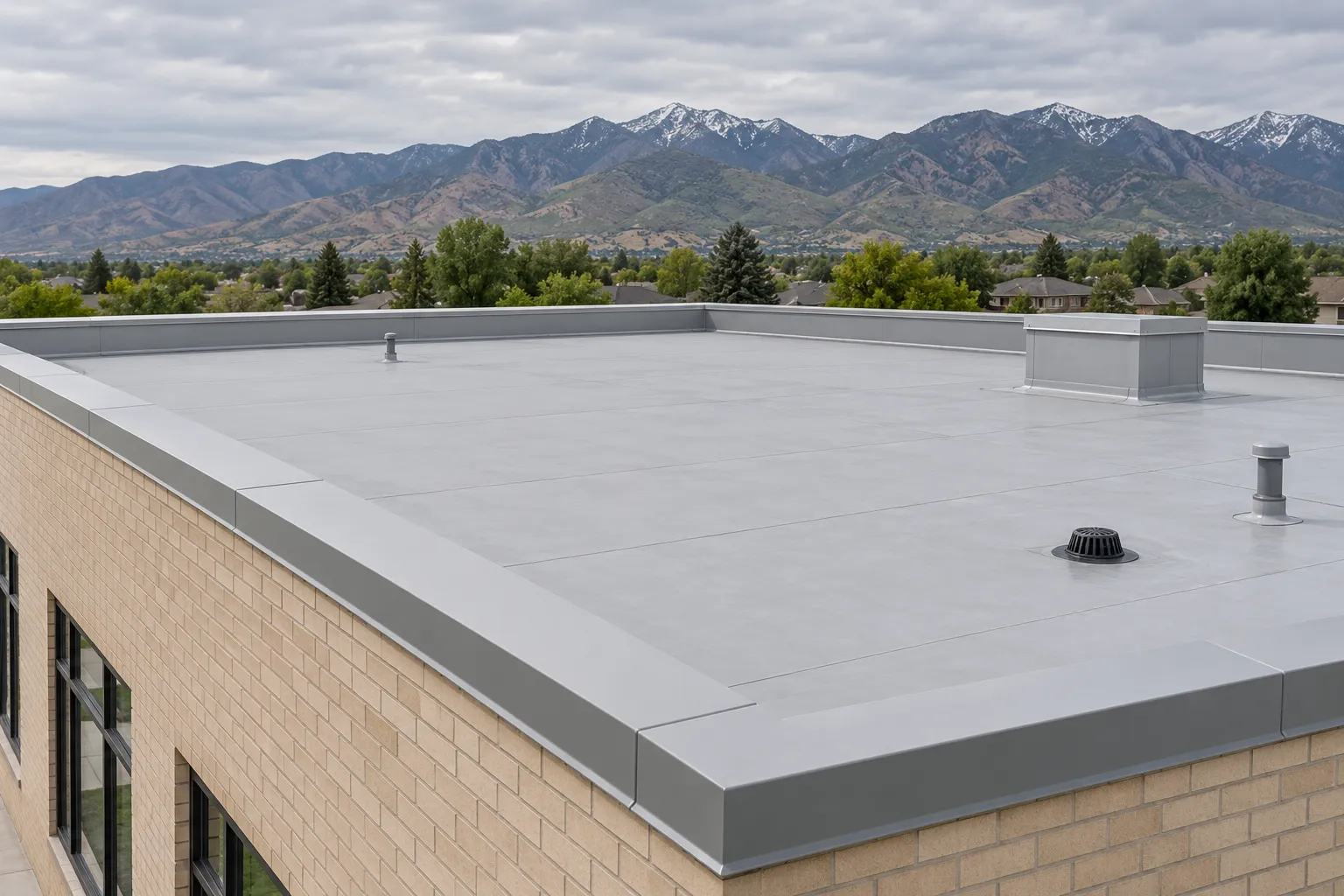
When it comes to roofing, one of the fundamental decisions you’ll face is whether to opt for a flat roof or a pitched roof. Each roofing style has its advantages and considerations, and the choice largely depends on your preferences, climate, and budget. In this article, this guide will explore the differences between flat roofing and pitched roofing to help you make an informed decision.
Flat Roofing
Pros of Flat Roofing:
- Cost-Effective: Flat roofs are generally more cost-effective to install because they require fewer materials and less labor.
- Accessibility: The flat surface of a flat roof makes it easy to access for maintenance, cleaning, and installation of equipment like HVAC units or solar panels.
- Occupied use requires a roof and structure designed for that purpose, with suitable waterproofing, protection and approvals. A low slope does not automatically permit a patio, garden or equipment installation.
- Modern Aesthetic: Flat roofs offer a modern and minimalist aesthetic that can complement contemporary architectural designs.
Cons of Flat Roofing:
- Drainage Issues: Flat roofs have a slight slope to allow for water runoff, but poor drainage can lead to ponding and leaks if not properly maintained.
- Maintenance Intensive: Flat roofs require regular maintenance to prevent water damage and ensure the sealing materials remain intact.
- Insulation options depend on the specific assembly and constraints. Low-slope and pitched roofs can both require detailed thermal, air and moisture design; slope alone does not establish energy performance.
Pitched Roofing
Pros of Pitched Roofing:
- Excellent Drainage: Pitched roofs naturally channel rain and snow away from the roof’s surface, reducing the risk of leaks.
- Versatile Design: Pitched roofs come in various designs, including gable, hip, and mansard, allowing for architectural creativity and aesthetic appeal.
- An attic may provide space for insulation and services, but energy performance depends on the actual thermal boundary, air sealing and assembly. A pitched shape alone does not prove that a building is more efficient.
- Longevity: Pitched roofs tend to have longer lifespans and require less frequent maintenance compared to flat roofs.
Cons of Pitched Roofing:
- Higher Initial Costs: The complexity of pitched roofs, along with the need for more materials and labor, typically results in higher installation costs.
- Limited Accessibility: The steep slope of pitched roofs can make them less accessible for maintenance and repairs, requiring specialized equipment.
- Aesthetic Considerations: Some homeowners may find the traditional appearance of pitched roofs less appealing for modern architectural styles.
Making the Right Choice
The choice between flat roofing and pitched roofing ultimately depends on your specific needs and preferences. Here are some factors to consider:
- Climate: In areas with heavy rainfall or snowfall, pitched roofs are generally more effective at draining water and preventing leaks.
- Budget: Flat roofs are often more budget-friendly for installation, but they may require more maintenance over time.
- Aesthetics: Consider the architectural style of your home and whether a flat or pitched roof complements it.
- Functionality: If you plan to use your roof for outdoor living space or equipment installation, a flat roof may be more suitable.
- Compare the actual insulation, air sealing and roof design. Neither low slope nor pitch alone establishes the more efficient assembly.
- Maintenance: Think about your willingness and ability to perform regular roof maintenance, as flat roofs typically require more attention.
Your next step
Let's start with your roof.
Share the property and the question. Confirm the scope before committing to work.